Start with the work zone and siting constraints
- Can the unit sit below and away from people and materials, or must it tuck into a tight apron?
- How far is the power run to panels, tools, or chargers? Longer runs raise conductor size and voltage‑drop planning.
- For lighting, is the target an open yard, a staging lane, or an interior bay with intermittent access?
In Augusta, many industrial sites straddle firm slabs and moisture‑holding soil. Soft shoulders and drainage swales can sink wheeled equipment. If the machine must sit off‑pavement, note grade and bearing so a rough‑terrain chassis or wider tires are considered.
Power in high‑humidity and mixed‑use buildings
Large, non‑climate‑controlled interiors around the city see heavy summer humidity. That affects generator placement and cable routing because heat and moisture can build around equipment. Quiet indoor power often shifts to building circuits or battery banks where permitted, while outdoor towables support tool loads and temporary panels. Document air movement and doors if cords must pass from outside to inside.
Light coverage and mast decisions
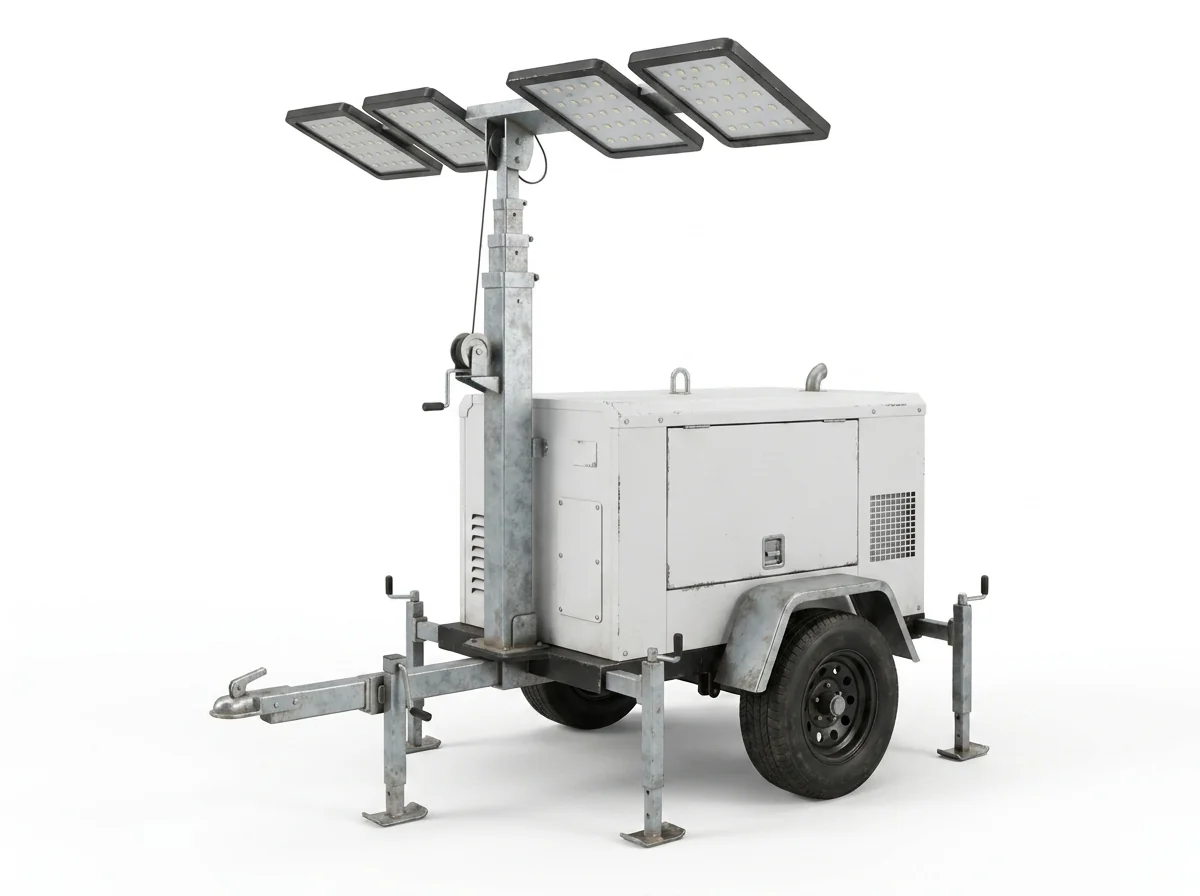
- Height: Can a mast rise clear of stacked pallets or racking without sitting under overheads?
- Throw: Yard lighting for loading lanes needs even spread; façade or perimeter lighting can be narrower with higher elevation.
- Power source: If lighting must stay all night in a remote corner, plan fuel or charging access without blocking traffic lanes.
Access route and surface
Confirm gate widths, low tree canopies, and any tight turns between the drop point and the pad. On red clay after rain, delivery pads and pickup spots may require firming. A level, drained location reduces trip and service interruptions.
Related lift planning
If lights or power serve elevated work, align the mast or cable path with the lift footprint. For smooth indoor slabs, compare units at /electric-scissor-lift-rental/ or /vertical-mast-lift-rental/. For outdoor tasks on variable soil, consider /rough-terrain-scissor-lift-rental/ or /boom-lift-rental/.
What to size and note before you call
- Total kW or kVA and largest single start load
- Run time target between service intervals
- Light coverage area and obstructions
- Siting pad dimensions, grade, and soil condition
- Route clearances, gates, and turnaround space
- Noise sensitivity near offices or housing