Siting and access geometry
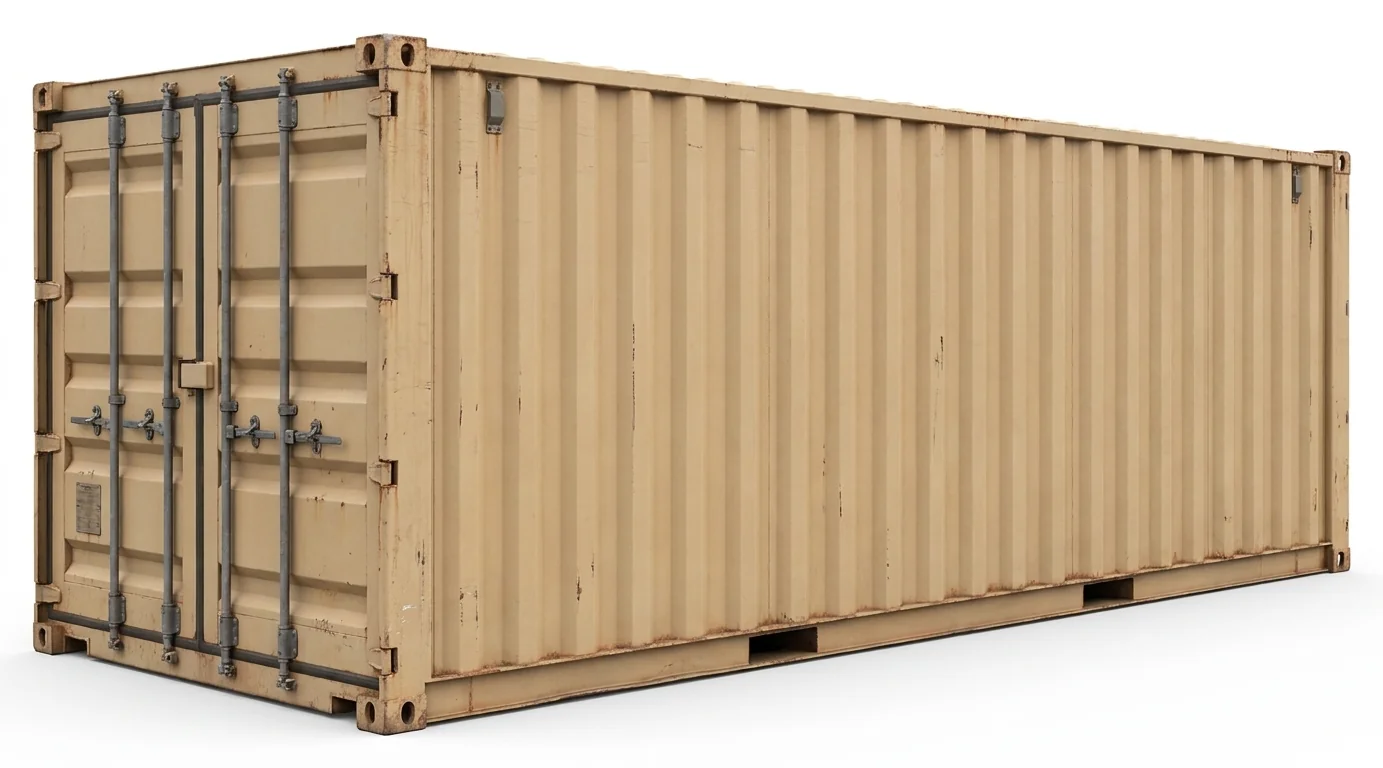
- Door orientation: Will the container face a dock lane or open yard? Leave room for forklifts to square up.
- Grade and drainage: Even small cross‑slopes can rack doors. A level, drained pad reduces sticking when humidity swells seals and plywood floors.
- Approach: Note gate width, low limbs, tight turns, and any slope to the set point for tilt‑bed or chassis access.
Surface and support in Fall Line conditions
Red clay holds water and softens after storms. Containers placed off‑slab may need blocking to distribute weight and keep doors true. On gravel, confirm compaction depth so traffic from lifts or telehandlers doesn’t rut the approach.
Use case: parts, tools, and lift attachments
If the container supports elevated work, consider where operators stage near the lift footprint. Keep the roll‑up or swing doors clear of the travel path for units like /forklift-rental/ or /telehandler-rental/. For interior projects, shorter containers can fit near bays served by /electric-scissor-lift-rental/ or /vertical-mast-lift-rental/.
Security and visibility
Perimeter lighting or a nearby light tower can deter off‑hours activity. If lights share power from a temporary generator, plan cord routing that won’t block doorways or snag under material pallets.
Measurements to define before you call
- Container length and door type needed for pallets or long stock
- Pad dimensions, slope, and surface type
- Clearance on the door side and the blind side
- Delivery approach path and turnaround room
- Any overhead obstructions at final set location