Purpose and line geometry
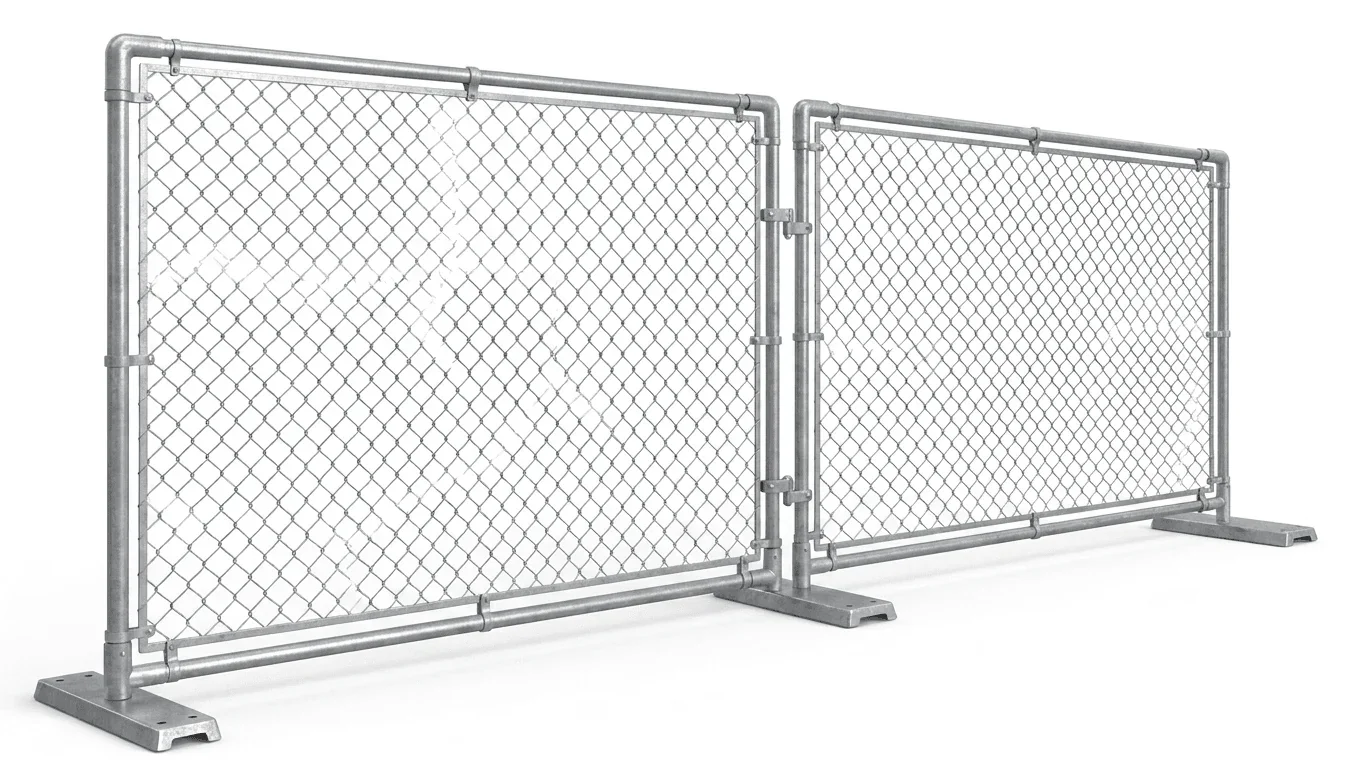
- Security perimeter: Long, straight runs prefer firm ground and unobstructed corners.
- Crowd or lane control: Short, movable sections need predictable footing on sidewalks or compacted gravel.
- Equipment separation: Barricades often run beside lift paths; confirm turning radii and platform swing for units like /boom-lift-rental/ or /rough-terrain-scissor-lift-rental/.
Surface and footing in Fall Line conditions
Red clay swells and softens after rain, undermining freestanding bases. Where runs cross soft soil, plan additional weighting and drainage gaps at low points so water doesn’t collect under panels. On slabs, mark expansion joints and door swings to avoid pinch points.
Access, visibility, and lighting
Delivery and set crews need clear approaches and staging pockets that won’t block gates. If night work is planned, coordinate fence lines with the throw from /generators-light-towers-rental/ so entries and crossings are well lit without glare into traffic.
Integration with elevated work
When fencing defines exclusion zones around aerial work, measure for platform reach and drift. Actual conditions, the selected unit’s instructions, and site procedures govern how close panels can sit to a working envelope. For tight indoor zones, /electric-scissor-lift-rental/ or /vertical-mast-lift-rental/ may reduce the footprint compared to larger booms.
Details to capture before you call
- Total linear feet and number of gates or openings
- Surface type along the route and known low spots
- Maximum panel height allowed by site rules
- Conflicts with utilities, doors, or loading lanes
- Required reflectors or signage for night conditions